




September
Wednesday
Histories
Select the settlement whose topics you want to see
Recently Added
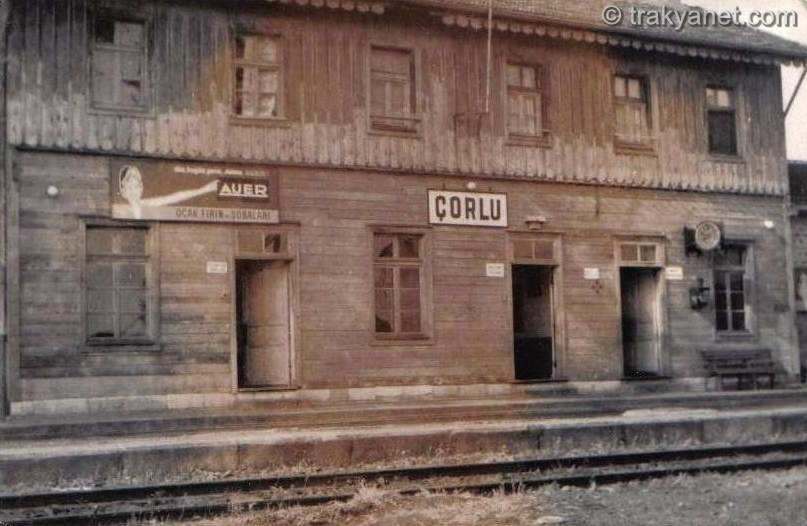
In the eighth volume of his Seyahatname (Book of Travels), Evliya Celebi mentions Corlu as follows:
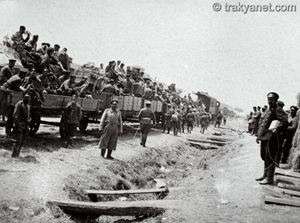
Corlu During the War Years
During the first phase of the 1912-1913 Balkan Wars, the headquarters of the Ottoman Eastern Army Command was located in Corlu. When news reached Corlu that the Bulgarians had captured Edirne and were advancing towards Babaeski and Luleburgaz during the Second Balkan War, the population panicked. To escape Bulgarian oppression, the people of Edirne province were abandoning their homes and trying to flee to Istanbul. These groups of people, fleeing to Istanbul by road, passed through Corlu, frightening the local population. Fearing a similar fate soon, they began packing their belongings.
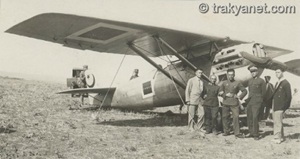
Corlu in the Ottoman Era
Corlu has been the scene of important historical events due to its location as a resting place on the main road extending from Anatolia to the Rumelia border during the Ottoman period.
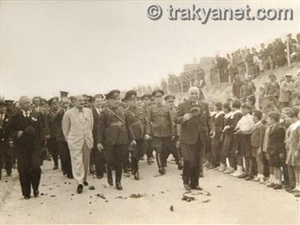
Conquest of Corlu
The Turks, who crossed into Rumelia during the reign of Ottoman Sultan Orhan Bey, began to advance in Rumelia during the reign of Murad I (Murat Hudavendigar). The new sultan's aim was to capture Edirne. However, before that, he seized Corlu and Luleburgaz to counter a potential threat from Byzantium.
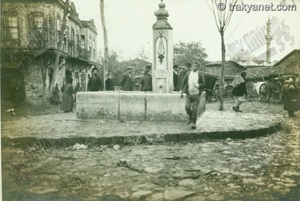
History of Corlu
The name Thrace comes from the Thracians, who also gave their name to the region. The Thracians arrived in the region in large numbers, with their raids beginning around 4000 BC. The first wave of Thracian raids, lasting until 2000 BC, occurred via Anatolia, while the second wave, lasting until 1200 AD, took place via the northern route.
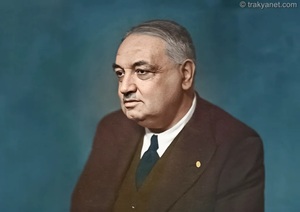
Famous Personalities Related to the History of Tekirdag
Tekirdag has been home to statesmen who left a deep mark on Turkish history from the Ottoman period to the present day, as well as important historical leaders exiled from Europe. Furthermore, the city is the birthplace of many valuable figures who shaped the world of literature and art during the Republican era.
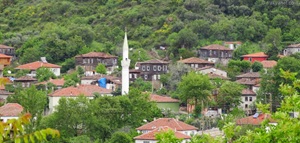
Historic Villages of Tekirdag
Before 1876, there were 142 Turkish villages and 45 Greek villages in Tekirdag province. Today, hundreds of village and farm names in Tekirdag province bear the names of old Yoruk tribes, clans, and settlements. Since many Turks from all corners of Anatolia came and settled in the lands of Tekirdag province during the founding period of the Ottoman Empire, many of the current village and farm names belong to the Oghuz Turks, their main branches such as the Avshars and Beydilis, the Danishmendids, the Dulkadirids, the Bozoks, the Karamanids, the Saruhanids, the Aydin and Karesi Ogullari, and the Syrian and Iranian Yoruks.
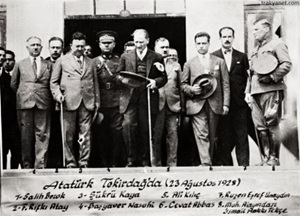
Ataturk and Tekirdag
Mustafa Kemal was serving as Military Attaché in Sofia during the First World War, which began on July 28, 1914. On August 2nd, an agreement was signed between the Ottoman Empire and Germany, and on October 29, 1914, the Ottoman Empire officially joined World War I alongside its allies, Germany and Austria. Following this entry into World War I, Lieutenant Colonel Mustafa Kemal, who was in Sofia, received a telegram from the acting Minister of War. The telegram stated, "You have been appointed commander of the 19th Division; leave for Istanbul immediately." Mustafa Kemal arrived in Istanbul and met with Enver Pasha, the acting commander-in-chief who had recently returned from the Sarıkamış operation. He inquired about which corps and army the 19th Division belonged to. The answer he received was to consult with the General Staff. Upon arriving at the General Staff, Mustafa Kemal found no one aware of the existence of such a division. After that, Liman met with Fon Sanders and learned that the party was still in its formative stages in Tekirdağ, so he travelled to Tekirdağ.
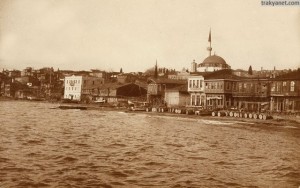
The Horizon of Conquests Tekirdag
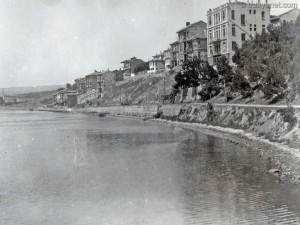
Tekirdag is located on the northwestern coast of the Marmara Sea, within the lands of Thrace. Due to its geographical position, it holds strategic importance as a passage region. The city is situated where the coastline transitions from an east-west direction to a north-south direction, along a semi-circular bay, partially on valley slopes and partially on cliffs. It has rapidly expanded towards the east-west and northern sections through successive terraces.
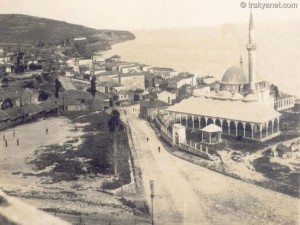
Tekirdag in the Roman/Byzantine Period
197 BC – 395 AD: With Roman military intervention in 197 BC, the Thracian tribes gained their independence. In 46 AD, after the Thracian King Rhoemetalces III was killed by his own wife, Emperor Claudius annexed Thrace as a province of Rome and appointed a procurator from the equestrian class to govern the province. To Romanize Thrace, Emperor Claudius established two Roman colonies in the interior regions of Thrace, settling retired Roman soldiers there.
Popular Topics
Tekirdag in Ancient Times
Tekirdag in the Roman/Byzantine Period
The Horizon of Conquests Tekirdag
Historic Villages of Tekirdag
Ataturk and Tekirdag
Famous Personalities Related to the History of Tekirdag
Corlu During the War Years
History of Corlu
Corlu in the Ottoman Era
Conquest of Corlu