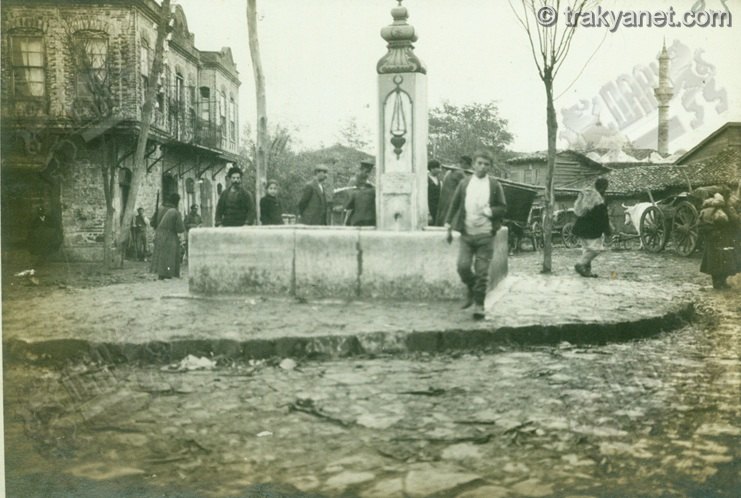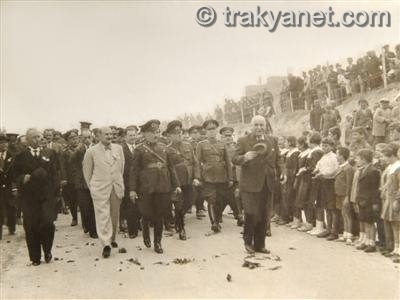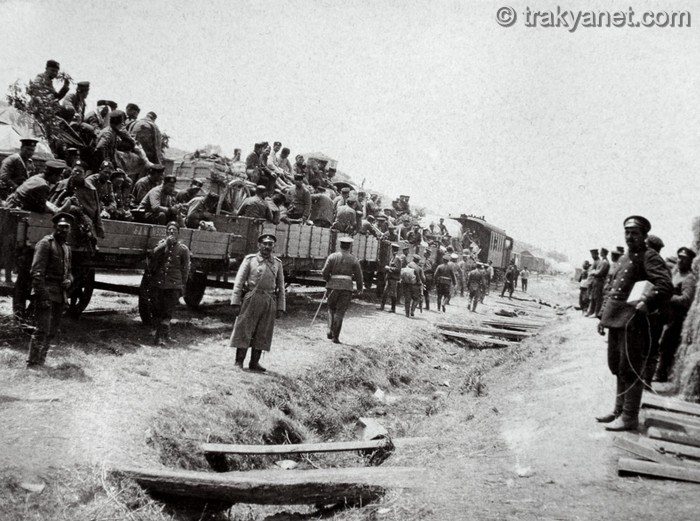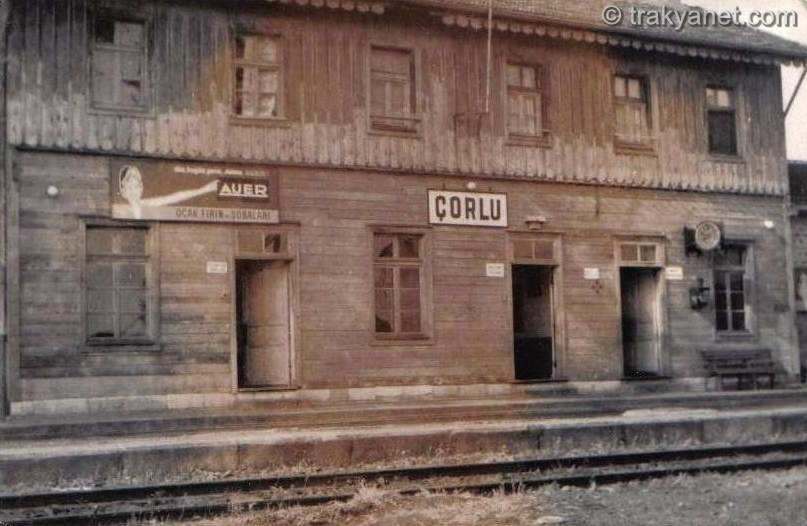

Corlu has been the scene of important historical events due to its location as a resting place on the main road extending from Anatolia to the Rumelia border during the Ottoman period.
Corlu was conquered by Murad I in 1357 and incorporated into Ottoman territory. After the deaths of Suleyman Pasha and Orhan Gazi, it fell back under Byzantine rule, but was definitively brought under Ottoman control in 1361. By order of Murad I, and as a warning to other Byzantine cities in Thrace, the Byzantines defending the city were severely punished, and its walls were demolished. Thus, the military importance of Tzirallum was eliminated. This harsh action immediately had an effect, and the conquest of Thrace was easily completed.
Bayezid II's son, Yavuz, who was the governor of Trabzon, had applied to his father to be transferred from Trabzon to a provincial capital in Rumelia, but without waiting for a reply, he had set out for Kefe to cross into Rumelia. When news reached Yavuz that his father was abdicating and would leave his younger son as sultan, he gathered an army of 10,000 men in Crimea and began marching towards Istanbul. Bayezid II, with an army he had prepared, moved against his son. The two armies met very close to Corlu, between the villages of Ulas and Karistiran (August 13, 1511). Yavuz was defeated by his father's army and retreated towards Plovdiv. However, when the army returned to Istanbul, a rebellion broke out. They stated that they wanted to see Yavuz as their sultan. Upon this, Bayezid summoned his son to Istanbul and handed over the sultanate. After offering prayers for his success, he set out to spend his last days in Dimetoka. He died on May 26, 1512, during the night they were staying in Ulas, where he had fought his son.
It is a strange coincidence that Yavuz Sultan Selim also died of anthrax in 1521 near Ulas, the same place where he fought his father while traveling from Istanbul to Edirne.
In September 1676, Grand Vizier Koprulu Fazil Ahmet Pasha passed away at the Karabiber farm between Corlu and Karistiran.
Corlu became a place of exile for the Hanzade and Giray families who were driven out of Crimea in the 18th century. When the Rumelia Beylerbeylik (Governorate) was abolished and the Edirne province was established in 1830, Corlu became a district within the Tekirdag sanjak (sub-district) of this province. It retained its status during the reform of the provincial organization in 1870, but temporarily fell into Russian hands during the Russo-Turkish War of 1877-1878.
Ottoman Sultans and Corlu
Mehmed the Conqueror ascended the throne as the 7th Sultan of the Ottoman Empire in 1451 and died in 1481 after a 30-year reign.
Undoubtedly, the most important achievement of Sultan Mehmed the Conqueror was the conquest of Istanbul. After the conquest of Istanbul in 1453, he had a mosque and complex built in his name. The Fatih Mosque and Complex, completed in 1470, had endowment lands in many places, including Corlu, to cover its expenses. Furthermore, regarding the Fatih Mosque (Ebulfeth Sultan Mehmed Han Mosque), which also holds the distinction of being the first mosque built in Corlu during the reign of Sultan Mehmed the Conqueror, the following is reflected in Ottoman Archive documents:
It is requested that the amount allocated as a per-unit tax from the Istanbul Rumiyan, Ermeniyan, and Gebran jizya (tax) be deducted from the Corlu and Eregli Treasury Tax Offices for the Ebulfeth Sultan Mehmed Han Mosque, Tomb, and Imaret in Istanbul. Furthermore, it has been ordered that the Eregli Tax Office in Rumelia, an annex of the same foundation, be leased to El-Hac Ahmed for three years, along with the Corlu Tax Office, due to its unproductive status. Regarding unlawful interference with the foundation, it has been ordered that the unlawful and irregular interventions in the foundation's revenues in Eregli, Silivri, Tekirdag, Corlu, and Rodoscuk be prevented, and that the foundation ensure the collection of these revenues. Furthermore, a decree was issued to the judge of Corlu and the wool master, ordering that after the inhabitants of Corlu, Eregli, Canta, and their dependent villages, which are part of the Sultan Mehmed Han-i Gazi Foundation's tax farm, paid their due taxes, no one should interfere with them. Another document is a decree regarding the payment of installments of salaries from the share of the treasury of infidels in Corlu, which was delivered to the Imperial Treasury on behalf of the Sultan Mehmed Han Foundation.
In 1762, it was ordered that the Ebulfeth Sultan Mehmed Han Mosque in Corlu, some parts of which were dilapidated and in need of repair, be repaired, provided that unnecessary expenses were avoided. Another order was issued in 1892 for the same mosque to be repaired once again.
In 1809, it was deemed appropriate to transfer the Yakublu Farm, within the Coksekban tax farm of the Sultan Suleyman Foundation, and the Bosna Farm land between Silivri and Corlu, belonging to the Sultan Mehmed Foundation, to the foundation, and to allocate the goods, grains, sheep, other animals and tools to the shipyard expenses.
The reign of Sultan Bayezid II, who ascended the throne after the death of Sultan Mehmed the Conqueror in 1481, was relatively peaceful, but it was a period of significant developments for Corlu. Although Yavuz Sultan Selim, who rebelled against his father, lost the battle near Corlu at Ugrasdere (1511), his path to the sultanate was opened there. Under intense pressure, Bayezid was forced to abdicate the throne to his son, and in April 1512, Yavuz Sultan Selim became the ninth sultan of the Ottoman Empire. Despite losing the battle in Corlu, Yavuz Sultan Selim's short reign of approximately eight years ended in 1520 due to a relentless illness he contracted in Corlu. He underwent treatment for a tumor on his back for nearly 40 days in Corlu, but passed away there, and his only son, Suleiman the Magnificent, succeeded him.
During his long reign (1520-1566), Sultan Suleiman the Magnificent commissioned numerous foundations, mosques, and charitable works. The works of Mimar Sinan, in particular, further enhanced the splendor of the Ottoman Empire. Sultan Suleiman left behind charitable works wherever the state's borders extended. He left numerous structures from the Balkans to the Arabian Peninsula and North Africa, and oversaw the repairs of the Al-Aqsa Mosque and the Kaaba. In Corlu, Sultan Suleiman also commissioned the construction of a mosque, soup kitchen, school, bathhouse, public kitchen, and water channels. He also had a bridge built over the Corlu River.
A document from 1573 states that Sultan Suleiman had a decree issued to the judge of Corlu, ordering that four zira (approximately 2.5 meters) of land on either side of the water channel, which passed through rural areas, should not be cultivated, and that these water channels should be preserved. In the same year, a decree was also issued to the governor of Vize, ordering the assignment of six people to repair the water channels. In 1762, a letter was written to the governor and deputy of Vize requesting that the lime to be used for the repair of the mosque, soup kitchen, school, bathhouse, and water channels built by Sultan Suleiman in Corlu be purchased at the old price, as the villagers had doubled the price of the lime that was being sourced from Sogucak village.
Regarding the mosque and foundation built by Sultan Suleiman the Magnificent in Corlu, the following documents exist: In 1585, due to the neglect of duty by the trustee of the Sultan Suleiman Mosque and Imaret and the resulting loss of foundation revenues, this duty was assigned to Bali, the general trustee of Sultan Suleiman's foundations. Again, in 1705, because repairs were to be carried out on the same foundation, an order was given to empty a caravanserai belonging to the foundation, carrying state-owned hay and grain to Hayrabolu. In 1706, while the Kutlofca Mukataasi (tax district) attached to the foundation was being seized with its inhabitants exempted from taxes and other duties, the inhabitants requested exemption from sheep and other taxes because the mukataasi had been destroyed and its houses burned due to invasions, and the new inhabitants had fled. In 1769, following the death of Durrizade Ibrahim Efendi, the preacher and imam of the Sultan Suleyman Mosque, Ahmed Efendi was appointed in his place. Also in the same year, Ali Aga, who had repaired the bridge built by Sultan Suleyman over the Corlu River, was tasked with repairing the Ergene bridge. The mosque and water sources built by Sultan Suleyman in Corlu were repaired in 1897 and 1898.
Hunting was highly developed, organized, and widespread throughout the Ottoman Empire. During the early years, Ottoman sultans went on hunting expeditions with hound keepers, and later, the privilege of hunting alongside the sultan passed to the palace hunters. Until 1478, their commander was the chief falconer, but after that date, the chief falconer became the head of the falconry ward in the Enderun, also known as the "hâne-i bâzyân." Sultan Suleiman the Magnificent's son by Hurrem Sultan, Selim II (Sari Selim), known for his fondness for hunting, also hunted in and around Corlu. A document from 1568 states that the Sultan would be hunting in Catalca, Corlu, and Kemer that winter, and orders that no one be allowed to hunt hounds or falcons in the protected hunting grounds in those areas. Another document from 1571 indicates that the Sultan would be wintering in Edirne that year, and requests that ample provisions be prepared at the Umurca and Kemer campsites in Corlu. A further decree from 1573 was sent to the Istanbul judge, ordering the preparation of barley, hay, straw, wood, and other provisions at Halkali, designated as the encampment for the Sultan's hunting party in the Corlu area. A copy was also sent to the Corlu judge. Furthermore, a decree was sent to the Istanbul judge ordering the provision of a butcher, a grocer, a blacksmith, and a cook for the Sultan during his hunting trip to the Corlu area.
An important document from the reign of Sultan Selim II (Sari Selim) reveals a decree issued to the judges of Corlu and Bergos concerning the Kadioglukoy village in Corlu, which was granted to the mother of Prince Murad. This decree ordered the renewal of lost boundary markers, the re-determination of the village's borders, and their registration in the court register, with a copy to be sent to Istanbul, in collaboration with the village's experts and those involved with the land.
A document from the reign of Sultan Mehmed III states that thirteen individuals, who were subjects of the Sultan's army in Corlu and had returned from the campaign, were made falconers. It was ordered that those claiming to be falconers outside of this group would not be given credence, and that the taxes they owed would be collected from them.
When Sultan Mahmud II, the son of Sultan Abdulhamid I, was born on July 20, 1785, prayers were offered and celebrations were held in Corlu. A document from the reign of Sultan Mahmud II contains a royal decree stating that the repair of nine fountains and the ablution fountains and water channels of two mosques built in Corlu by Suleiman the Magnificent were nearing completion, and that a new fountain would be built for Sultan Mahmud.
During the reign of Sultan Abdul Hamid II, texts written by Feyzi Efendi, the Persian teacher at the Sultan's School, for mosques built in Corlu, including Turbedere, Velimese, Veli, Kizilpinar, and other villages, and named after Sultan Mustafa, Sultan Mehmed III, Sultan Ahmed, Sultan Osman II, and Yavuz Sultan Selim, were presented to the Sultan. The names of the villages and mosques mentioned in this document are as follows:
- Sultan Mehmed III Mosque in Velimese village
- Sultan Mustafa Mosque in Turbedere village
- Sultan Murad III Mosque in Ferecik village
- Sultan Bayezid II Mosque in Sarbdere village
- Sultan Osman II Mosque in Kizilpinar village
- Sultan Suleiman the Magnificent Mosque in the village of Bodime (Podima)
- Yavuz Sultan Selim Mosque in Koyuntepe village
- Sultan Selim II Mosque in Selimiye village
- Sultan Ahmed Mosque in Veli village
Also in 1894, dates prepared for placement in mosques built in the villages of Velimese, Turbedere, Veli, and Kizilpinar in the Corlu Imperial Estates district, and named after Sultan Mustafa, Sultan Mehmed III, and Sultan Osman II, were presented to Sultan Abdul Hamid II. Another document from the reign of Sultan Abdul Hamid II shows that in 1908, the Imperial Estates Branch building in Corlu, which had been given to the Treasury by the Sultan, was allocated to the military.
In 1910, Sultan Resad laid the foundation and began construction of a primary school near the Kanuni Sultan Suleyman Madrasa in Corlu with the help of the local people. He named the school after Kanuni Sultan Suleyman and donated fifty lira to it. In 1911, the neighborhood formed by the immigrants who settled on the outskirts of Corlu was named Resadiye after the Sultan.