






The name Thrace comes from the Thracians, who also gave their name to the region. The Thracians arrived in the region in large numbers, with their raids beginning around 4000 BC. The first wave of Thracian raids, lasting until 2000 BC, occurred via Anatolia, while the second wave, lasting until 1200 AD, took place via the northern route.
The region was settled by the Phrygians as a result of the Aegean migrations in 1200 BC, and by Greek colonies in the 800s BC. Thus, the people of the region, who lived in settlements that could be described as villages and hamlets, first transitioned to a city-like structure in the early 7th century BC. Some of the colony cities established in these years developed over time into independent city-states and became the most important elements connecting the Aegean and Mediterranean geography. Among the city-states established on the northern coast of the Sea of Marmara are Bisanthe (Barbaros, Tekirdag), Heraion Teichos (Karaevlialti), Perinthos (Marmara Ereglisi), Selymbria (Silivri), and Byzantion (Istanbul).
Like the rest of Anatolia, Thrace came under Persian rule in 546 BC. Between 430-281 BC, it was ruled by the Odrysian Kingdom, and in 340 BC, it was conquered by Alexander the Great, King of Macedonia. Between 281-212 BC, the Celts (Galatians) established their dominance in the region.
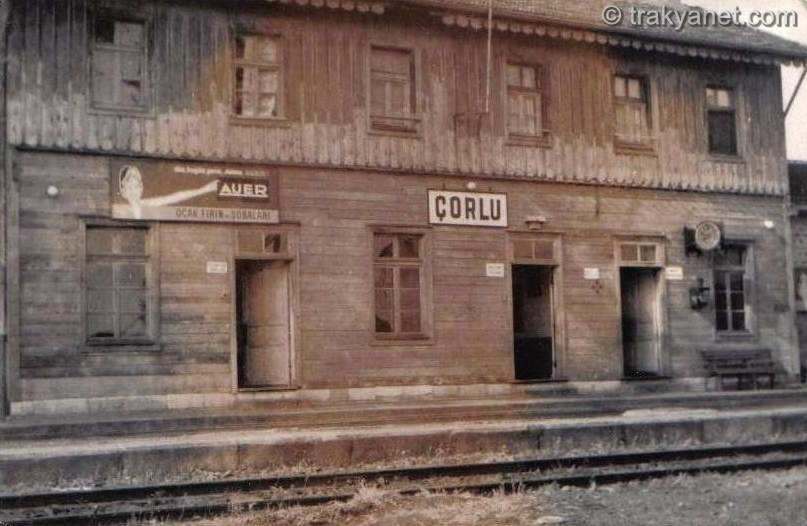
In 168 BC, the Roman Empire, gaining power in the region, established the Kingdom of Thrace. Greek colonies on the coasts, which were granted independence under Roman rule, settled in the interior regions, establishing new villages and towns. One of the important settlements established by the Hellenic colonies was Corlu, where farms and stables were located in the Cerkezkoy area.
After the division of the Roman Empire into two in 395 AD, Corlu remained within the borders of the Byzantine (Eastern Roman) Empire. In the 7th century AD, the lands belonging to the Byzantine Empire were divided into military regions called thema (corps), laying the foundations of a system that would leave its mark on the provincial administration of the Empire for many years. One of the themes created was the Thracian Theme.
One of the important military fortresses of the Byzantine Empire in the region was Corlu (Tzirallum/Tzirallun/Tzirallon). This place witnessed important events in Byzantine history. For example, the elevation of Alexios Komnenos to the throne was discussed at the Corlu meeting. The region, which remained under the administration of the Latin State established in Istanbul in 1204, was later reclaimed by the Byzantine Empire in 1247.