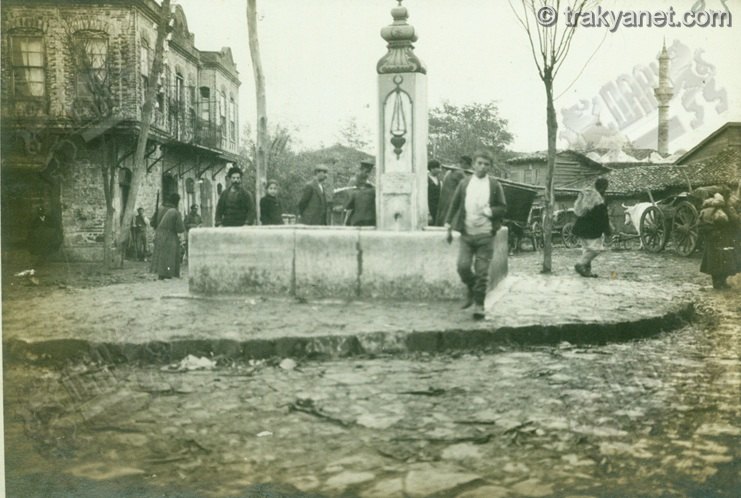

In the eighth volume of his Seyahatname (Book of Travels), Evliya Celebi mentions Corlu as follows:
Note: This excerpt from Evliya Celebi's Seyahatname has been simplified as much as possible.
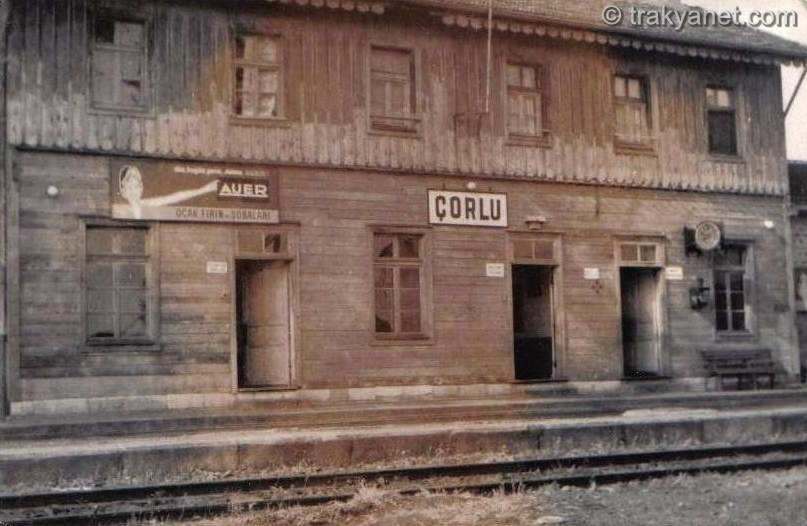
The Byzantines, in order to protect Istanbul from their neighboring states in Thrace, established the town of Corlu in the very center of Thrace and on the road to Istanbul. They built a fortress on a hill next to the town.
It is said that its founder was Yankobin Madyan. The first conqueror is said to be Hudavendigar Gazi (Murat I), the conqueror of Edirne, in 720. After he razed the fortress to the ground and left, and after he was martyred in Kosovo, the enemy repaired and reclaimed it. After this, Yildirim Beyazit conquered it and completely demolished the entire fortress. The remnants of that time are still present on the outskirts of Corlu.
After this, Sultan Mehmed the Conqueror conquered it, and it became a district of Edirne province with a value of one hundred and fifty akce. There are three thousand tiled houses in fifteen Muslim neighborhoods and fifteen non-Muslim houses.
The Muslim neighborhoods are: Arabacibasi neighborhood, Muslihiddin Efendi neighborhood, Kececizade neighborhood, Abbazzade neighborhood, Hisar neighborhood, Karacaahmet Sultan neighborhood, Burhanzade neighborhood, Elhac Gani neighborhood, Mustafa Efendi neighborhood, and Odunpazari neighborhood. Each neighborhood has a mosque, but only three mosques are where Friday prayers are performed. The Arabacibasi mosque has tiled roofs. The old mosque is lead-free and has an imaret (soup kitchen). The imaret mosque belongs to Sultan Suleyman. The following is written on the door of this mosque: Sheikh Suleyman Sahib-el-hayrat Fikir gerdem kikuyemes tarih Hafif-i gayb guft tarihin Kildi bu cami-i serifi bina Kuned en vakti in sade peyda Kad bana mabaden lihubbi Huda Sene 928.
When mentioning the caravanserais, he lists the following:
There are eighteen caravanserais. It is a commercial center because a market is held twice a week. Four of the caravanserais are entirely lead-clad. The Ahmet Efendi Caravanserai, Akcakolukoglu Caravanserai, Osmandede Caravanserai, Davutzade Caravanserai, Hidayetullah Celebi Caravanserai, Katir Nalbandi Mustafa Pasha Caravanserai, Kizilbaszade Caravanserai, and Husnu Dede Caravanserai are famous caravanserais.
When mentioning the baths, he also states that the Daya Treasury was used as a cemetery. Two important tombs are located here. One is located southeast of the mosque (towards the qibla) and is dated H.1194. The tomb is in the form of a sarcophagus, and its headstone has an inscription. The tomb is made of marble. Lightly relief plant motifs and large rosettes are visible on all sides of the sarcophagus. The inscription on the headstone, written in six lines of Thuluth script, is noteworthy:
"The Hatun Bath, the Imaret Bath, belonged to Suleyman Han. The market is divided. The grocery market and other tradesmen's markets are gathered on one side. The markets are paved with white stones. The land is very large. Many sheep are raised. Its cheese is very famous."