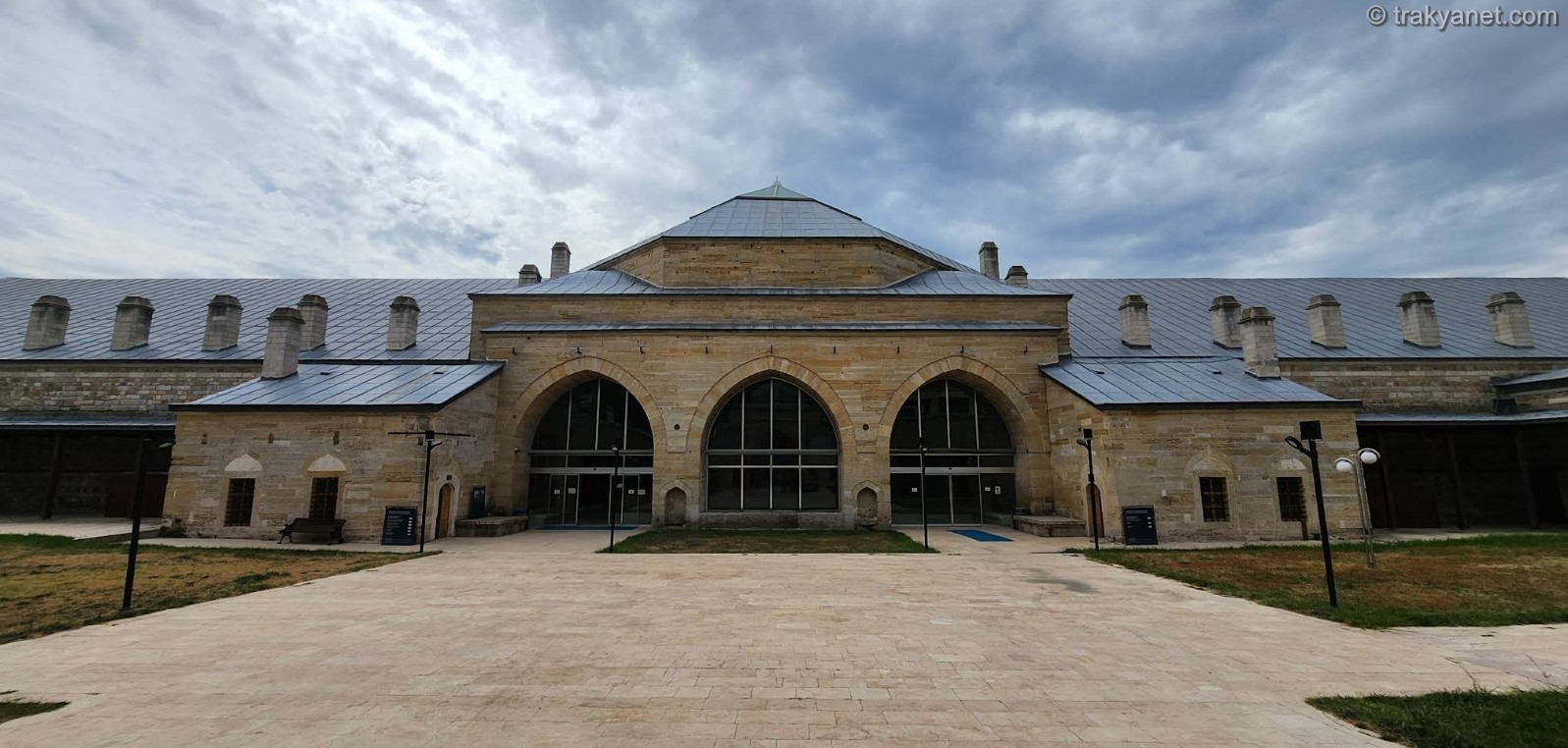

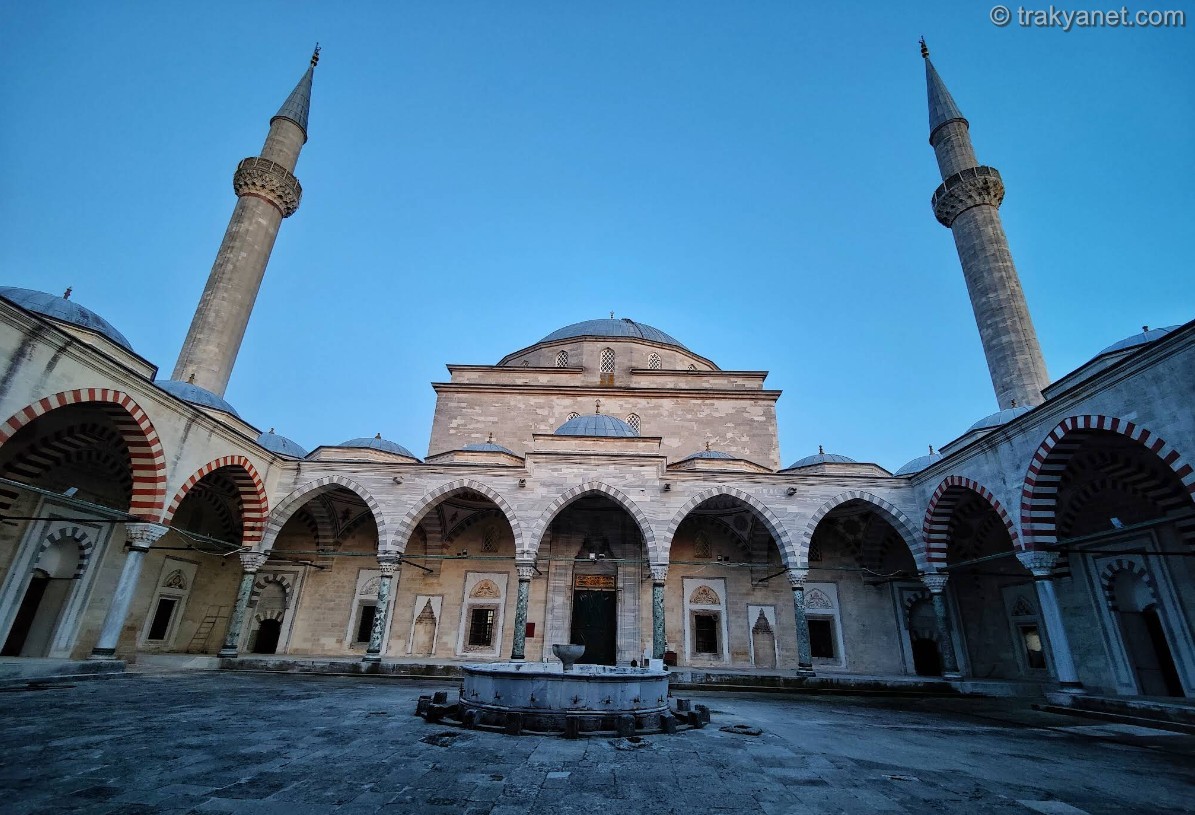
The Health Museum is a medical history museum established in the Daraüşşifa (hospital) section of the complex built by Sultan Bayezid II, son of Sultan Mehmed the Conqueror, in 1488.
The complex consists of a hospital, madrasa (religious school), mosque, imaret (soup kitchen), tabhane (medical facility), and kiler (storeroom). Established by Trakya University in 1997, the museum later expanded with the addition of the madrasa and imaret sections. It is one of the most visited historical sites in Edirne. Historically, it was known as a place where mental and psychological illnesses were treated with music and the sound of water. The Health Museum is the recipient of the Council of Europe's 2004 European Museum Award, considered one of the most prestigious museum awards. In 2007, the museum also received the European Cultural Heritage Association's Best Presentation Award.
The museum won the Council of Europe European Museum Award in 2004. This award is one of the most prestigious museum awards in the world. In 2005, it made another significant contribution to the promotion of our culture by giving the second best presentation at the "Meeting of World Award-Winning Museums" held in Dubrovnik, Croatia. The museum was accepted into the "Club of Excellence" by the European Heritage Association.
The Health Museum won the best presentation award at the "Best of Cultural Heritage" and "Excellence Club" awards-winning museums meeting held in Cologne, Germany, between October 31 and November 3, 2007.
This museum, located within the Sultan Bayezid II Complex Hospital in the Yeniimaret neighborhood of Edirne city center, is one of the largest projects undertaken by Trakya University in the field of cultural heritage and conservation.
This project prevented the destruction of an important historical site in Edirne, the second capital of the Ottoman Empire, and added a significant brand to the city's tourism sector.
Trakya University's commitment to preserving these important structures stems from its desire to preserve Edirne's history of higher education and medicine. Because the madrasa (religious school) of this complex, which opened in 1488, served as a university where fundamental medical sciences were taught, while its hospital was where students practiced.
Today, Trakya University, which provides both medical education and practice, also demonstrates its responsibility towards history by keeping alive the educational and practical approaches of five hundred years ago.
The difficult times for Edirne, which began after the Ottoman-Russian War when the city was occupied by the Russians and culminated in the Balkan Wars, led to many structures, including the complex, being left neglected. Due to the economic difficulties experienced after the Republic and the lack of attention given to cultural heritage, these important historical buildings faced the threat of destruction and disappearance. In 1984, they were transferred to Trakya University and, after a restoration process, began to be used as educational facilities.
The infirmary section of the complex, which was converted into a museum in 1997, gained significant publicity by receiving the Council of Europe 2004 European Museum Award, one of the world's most prestigious museum awards.
Here, a 500-year-old "Ottoman hospital" (bimar: patient, hane: house) has been recreated. In these spaces, where treatment utilized not only the medical knowledge of the time but also music, the sound of water, pleasant scents, and engaging activities, the past is brought to the present with a rich visual narrative.
As soon as you enter the first courtyard, powerful melodies of music envelop you. Upon entering the "History of Psychiatry Section," the main area of the museum, you find yourself in a music therapy setting from centuries ago. The sound of water flowing from the fountain in the central pool, combined with the mystical sound of the ney (a type of flute), takes you on a journey through time.
Patients, doctors, caregivers, singers, and musicians stand before us as if they were alive. The lighting and sound system complement this reenactment.
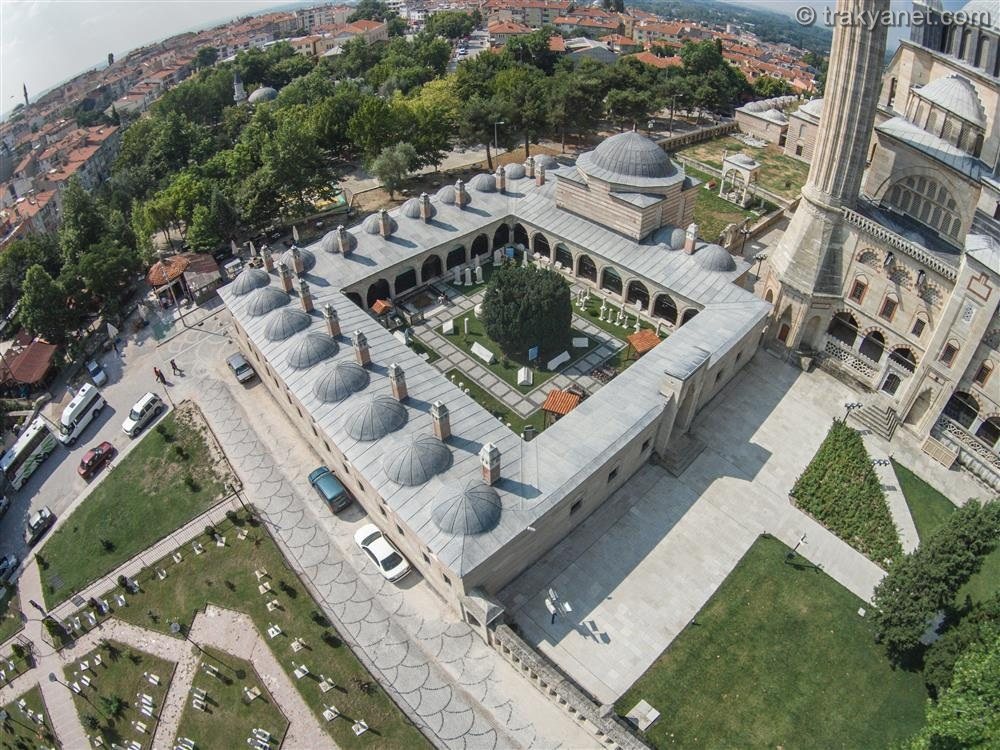
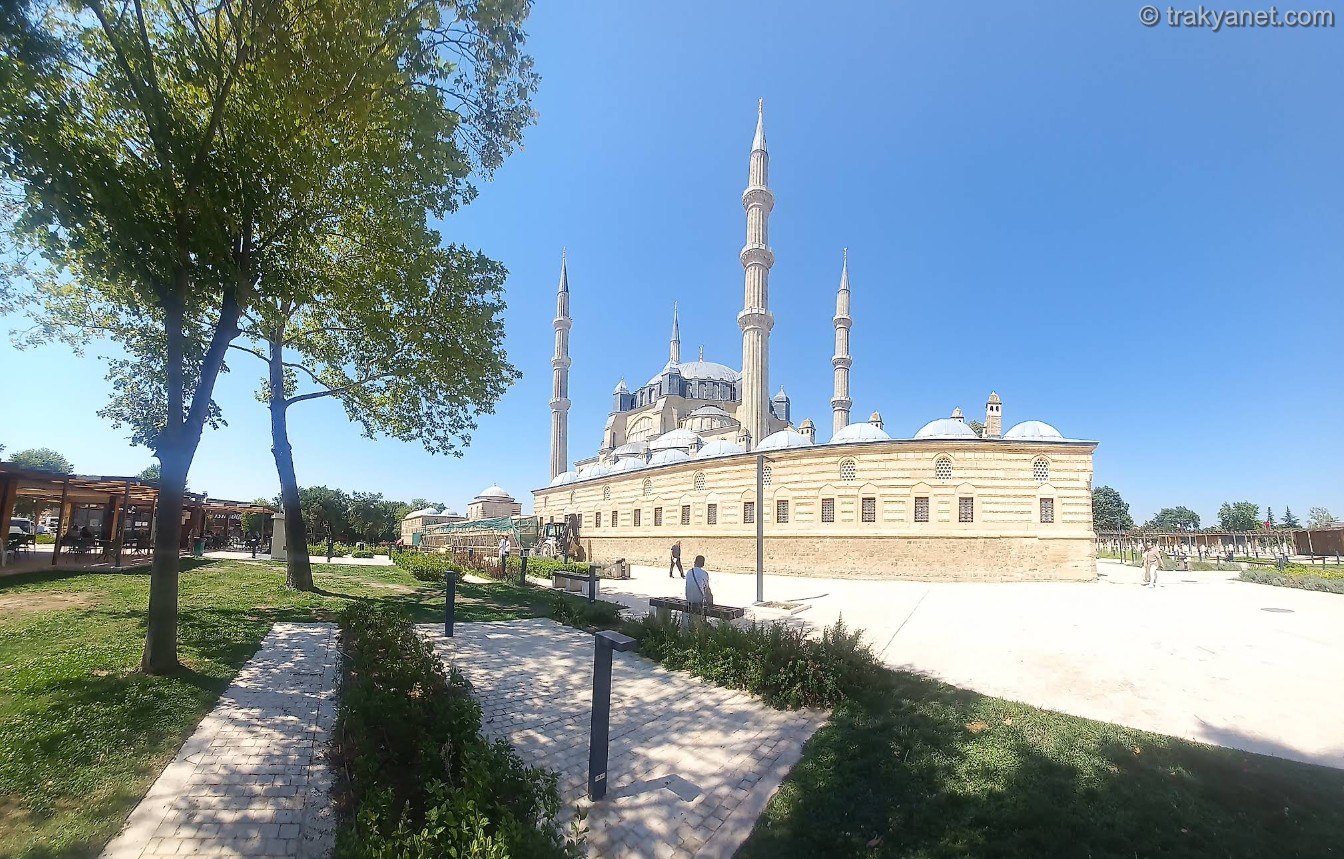
All of this is happening in Edirne, on the banks of the Tunca River, in one of the most magnificent structures in our architectural history. It would be more accurate to call it a complex of buildings. With its mosque, soup kitchen, guesthouse, bridge, madrasa, and hospital, all exhibiting exceptionally fine stonework, it is a kulliye (religious complex) composed of structures that complement each other.
Its architecture is pleasing to the eye at first glance. Over a hundred domes of varying sizes give the complex a mystical appearance. The complementary graphic structures create an elegant unity. Although still very young, this museum, which has achieved significant success and become one of the important centers of Edirne's cultural life, will continue to introduce our historical values to the world with a different approach to museology, by growing even larger in the coming periods, incorporating other parts of the complex.
The primary purpose of the complex was to provide Edirne, one of the most important cities of the time and the second capital, with a hospital. Designed with a broad scope, the other units within the complex were social, cultural, and religious structures that directly or indirectly complemented the hospital services. The fact that all units served the same purpose reflects the understanding of health and social welfare of the period. The completion of the entire complex in a short period of four years is an indicator of the economic and technical power of the empire.
The complex includes the following units:
- Darussifa (Hospital)
- Tabhane (Guest and Rest House)
- Medical School (Faculty of Basic Sciences)
- Mosque
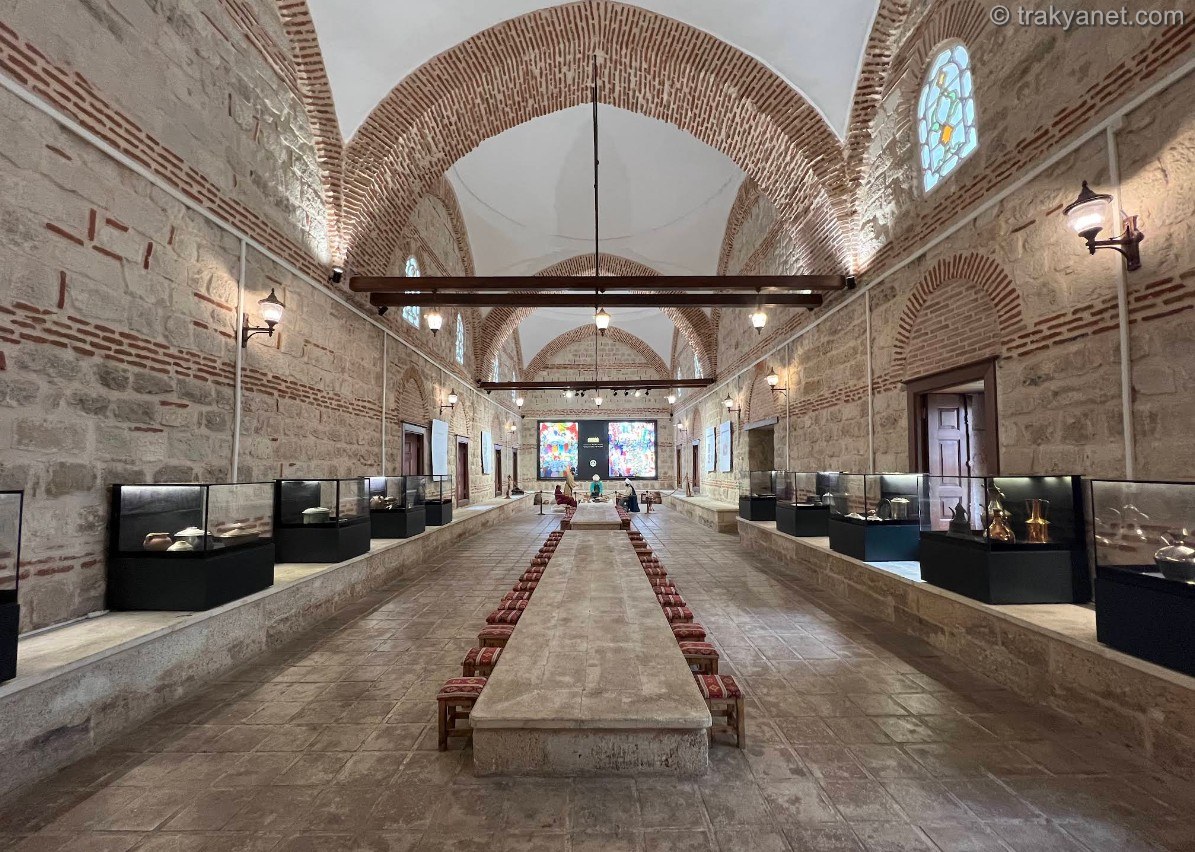
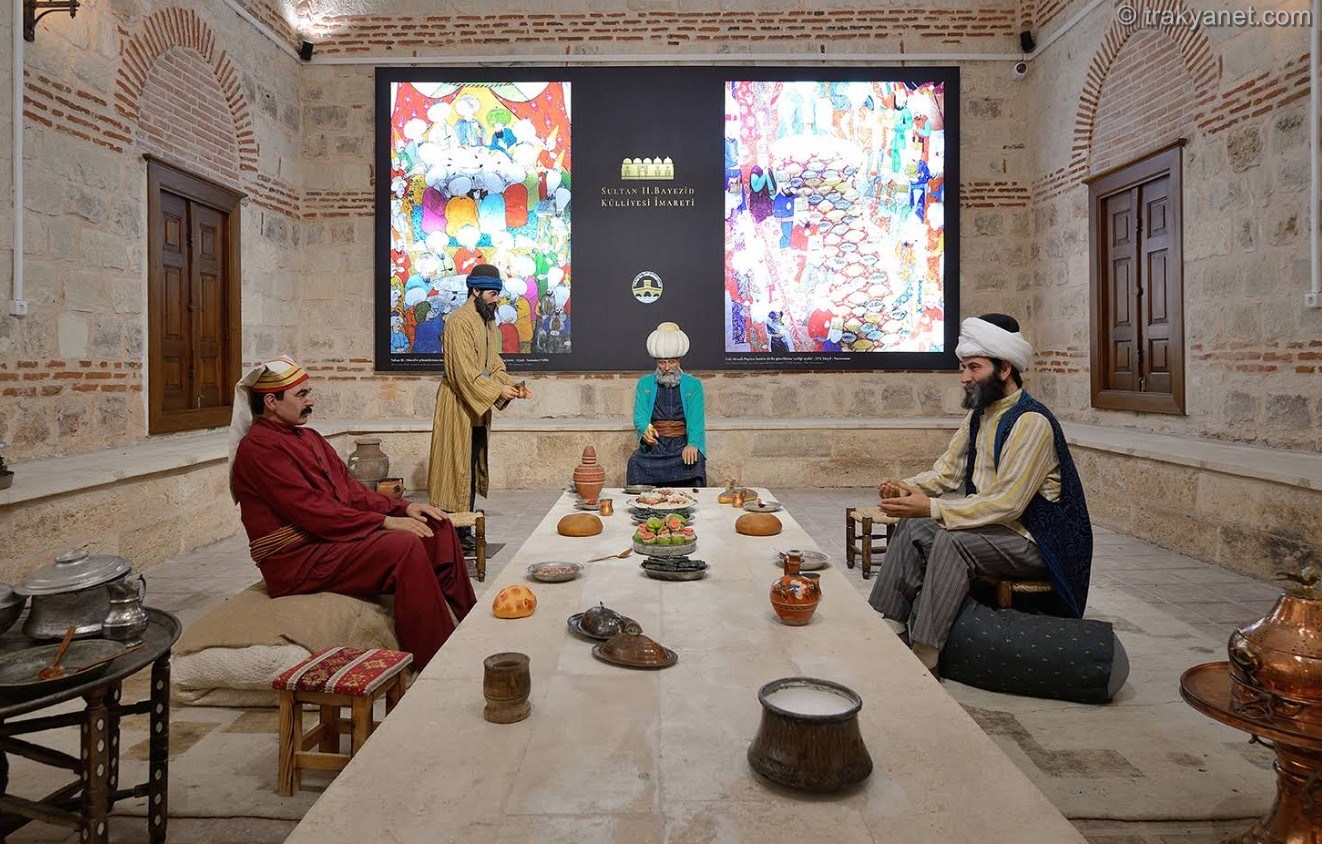
- Imaret (Kitchen, dining hall, storage room, etc.)
- Bridge (over the Tunca River)
- Bathroom
- Mill and water reservoir
- Primary School
- Mehterhane (The music conservatory of the period)
- Muvakkithane (The institution that announces the hours of the day and the calendar)
Of these units, those listed in numbers 1-6 have survived to the present day. Those listed in numbers 7-11 have been demolished. Those listed in numbers 9-10 and 11 are not mentioned in the foundation deed of the complex and were built later.
The Hospital's Staff During Its Founding Years
The hospital staff included 1 chief physician, 2 physicians, 2 ophthalmologists, 2 surgeons, and 1 pharmacist. Including other personnel, the total number of staff reached 21. This staff number has changed over time.
Chapters
The museum consists of two main sections: the hospital and the medical school.
Darussifa First Courtyard
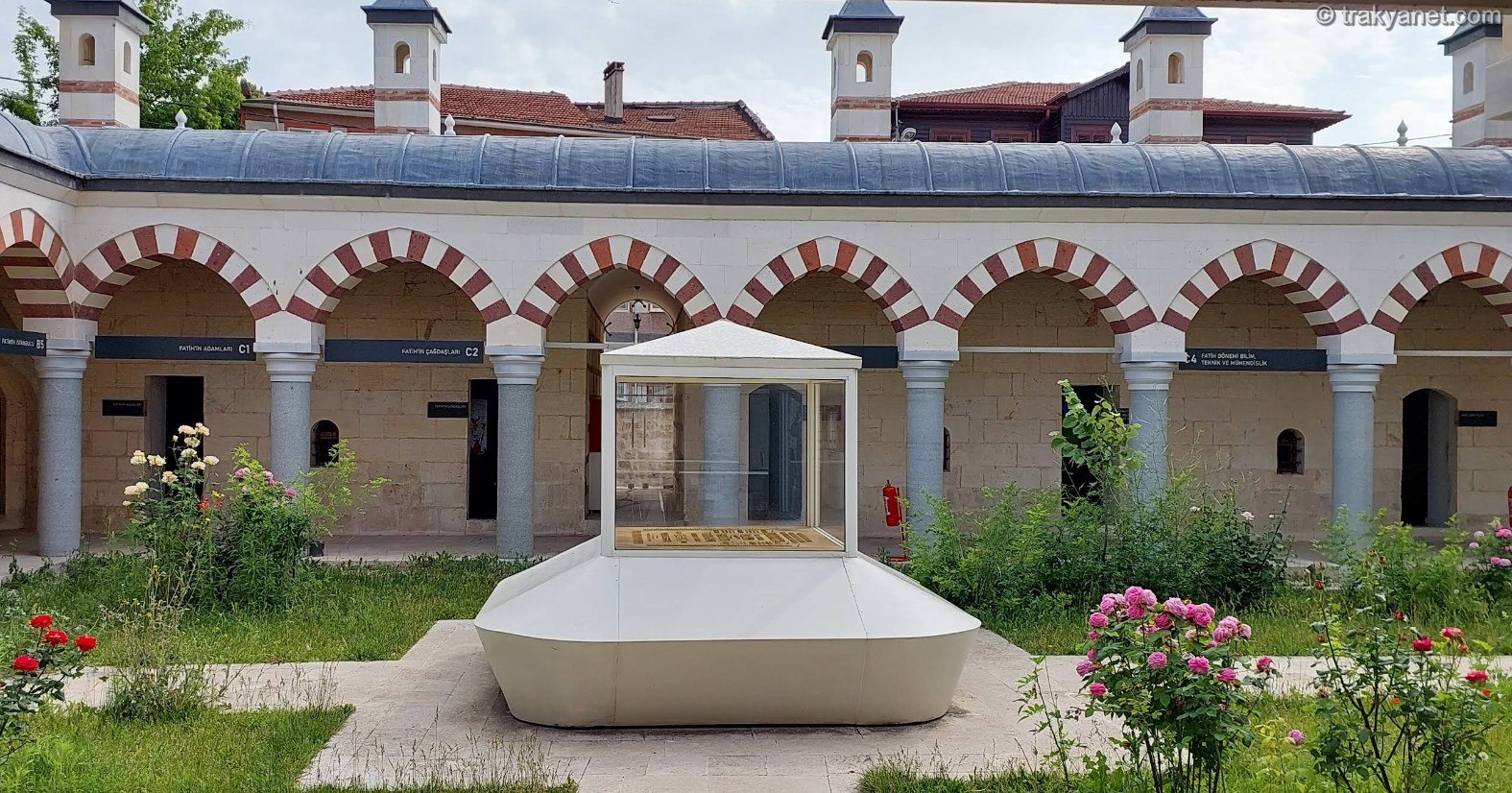
In the first section, where the first courtyard is located, various exhibitions are held in the rows of rooms next to the columns, which were formerly used as polyclinic rooms. In the rooms used as service rooms, such as the kitchen, laundry room, and syrup room, the old kitchen of the infirmary has been recreated. There is also an exhibition of old photographs of Edirne here. In the same courtyard, one of the two large halls, which were formerly used as a pharmacy and medicine warehouse, contains an exhibition on the history of medicine, while the opposite room is used both as a presentation room and a room displaying drawings of the Edirne Palace.
Darussifa Second Courtyard
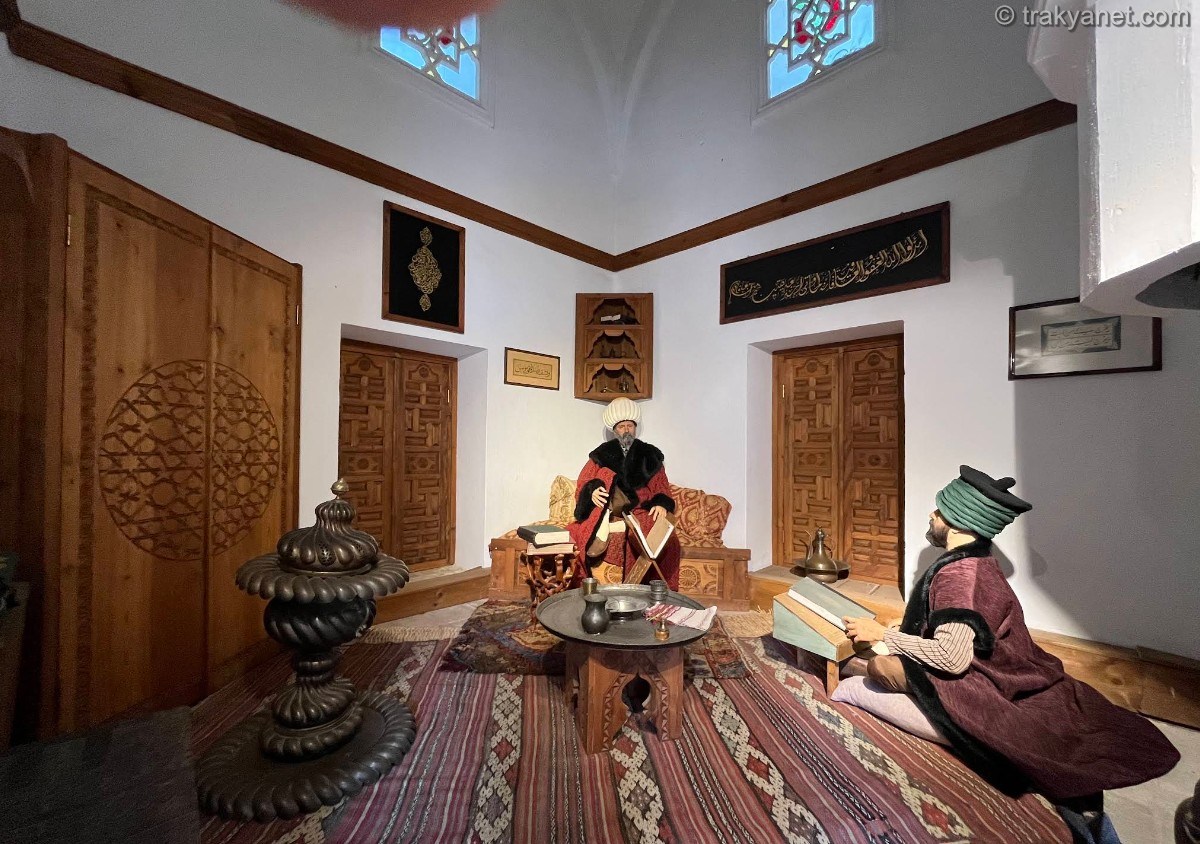
The second courtyard contains a small garden and four rooms facing each other. These rooms were formerly used as administrative offices. Currently, one room is still used by the museum director, another has been recreated as the chief physician's office, and the other two rooms have been arranged as the offices of Dr. Rifat Osman and Ord. Prof. Dr. Suheyl Unver.
Darussifa (Hospital)
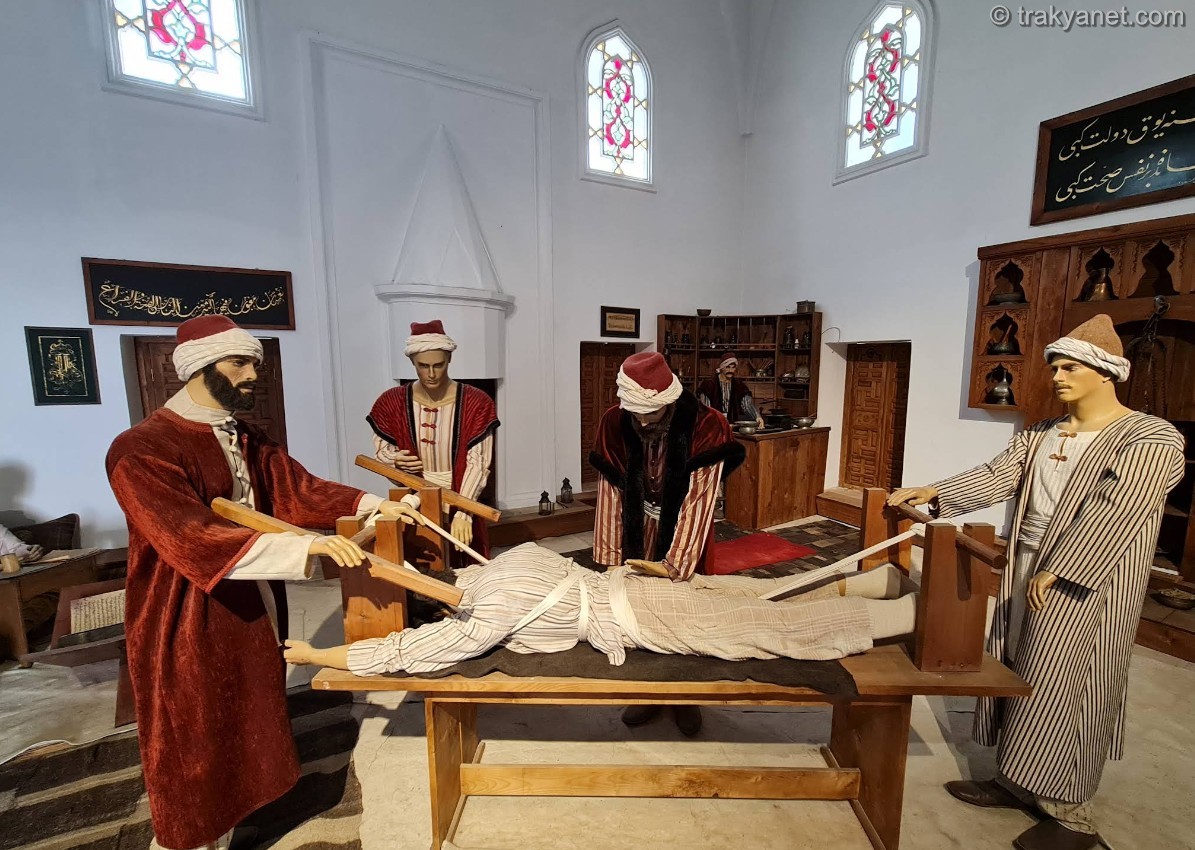
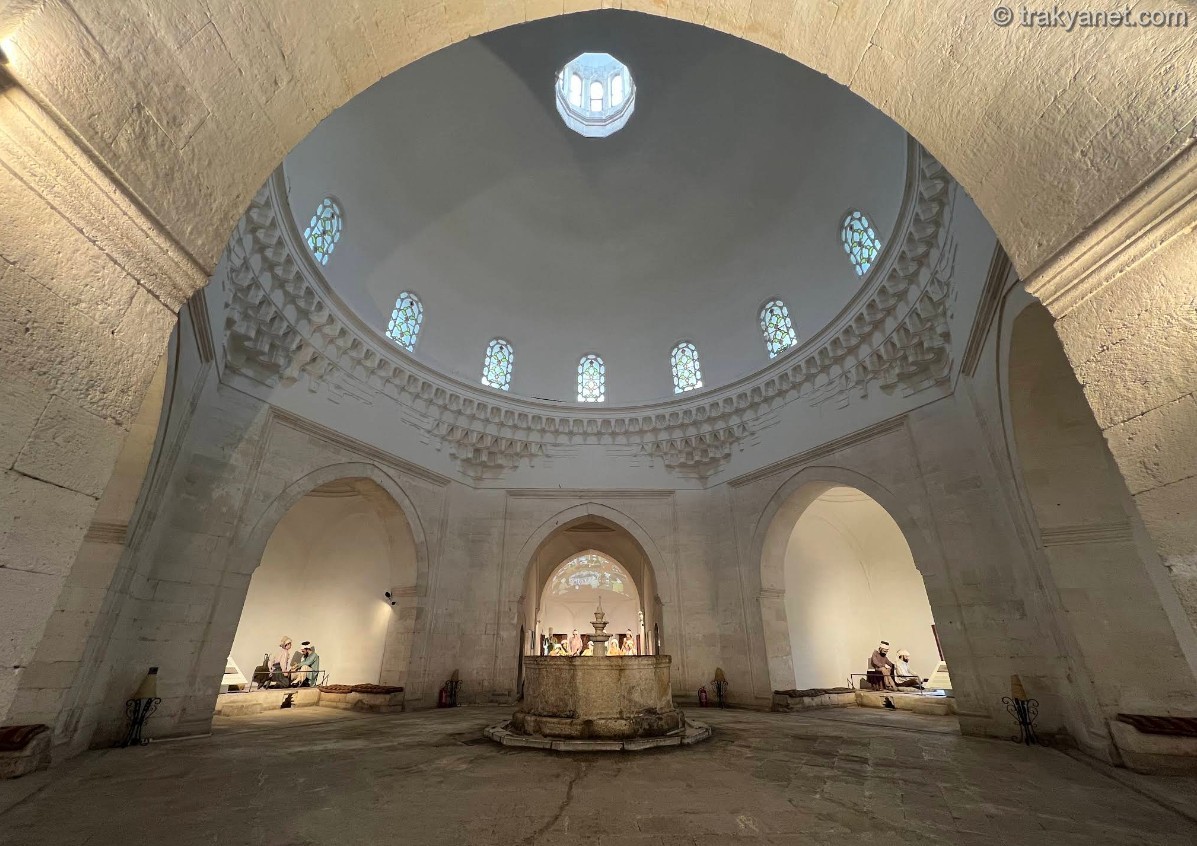
The third section is the area where patients were hospitalized in the past. Here, there are four summer rooms, six winter rooms, and a music stage. Water flows from the fountain in the central pool. This space, famous for its acoustics where mentally ill patients were treated with music, the sound of water, and pleasant scents, has been recreated by the Istanbul Association for the Readaptation of Mental Patients with mannequins and a lighting system appropriate to the atmosphere of that era. Visitors touring this section experience the treatment environment of the past firsthand through the meticulously crafted mannequins, music, and the sound of water flowing from the fountain.
Medical School (Medreset-ul Etibba)
The former medical school, known as Medrese-i Etibba, where physicians of the time were trained, was renovated as a new section of the Health Museum with the contributions of the Rotary International District 2420 Governorship and officially opened on April 23, 2008. It contains 18 student rooms, a classroom, and a central courtyard. This section, including the guard room, student rooms, practical training room, professor's room, classroom, and library, has been recreated with mannequins.
European Museum Award
The museum won the Council of Europe European Museum Award in 2004. This award is one of the most prestigious museum awards in the world. In 2005, it received the 2nd best presentation award at the "Meeting of World Award-Winning Museums" in Dubrovnik, Croatia, and in 2008, it received the best presentation award in Cologne, Germany, making another significant contribution to the promotion of our country and culture. The museum has been accepted into the "Club of Excellence" by the European Heritage Association.
The museum is located within the Darussifa (hospital) section of the Sultan Bayezid II Complex. The complex was built by Sultan Bayezid II, the son of Mehmed the Conqueror and the 8th Ottoman Sultan. Sultan Bayezid II laid the foundation stone in 1484 while embarking on his Akkerman campaign, and the complex was completed and opened to the public in a short period of about four years. There is a widespread belief that the architect of the site was Hayrettin, but this view is not definitively supported by historical documents today. Some researchers suggest that the architect was Yakup Sah Bin Sultan Sah.
For centuries, medical students were trained in this complex, the sick were healed, and the poor were fed. The mosque within the complex, considered one of the purest and simplest mosques in the Islamic world, served as an important place of worship; candles illuminating Edirne were forged in its candle factory; and guests were entertained in its guesthouses.
The Darusifa (hospital) section was one of the most important health centers of its time. From its inception, it served all kinds of patients; indeed, its founding deed mentions two surgeons and two ophthalmologists among its staff. This indicates that even eye diseases were treated in these facilities in the 1500s.
In later years, the infirmary began to provide services for the mentally ill, and patients were treated not only with the medical knowledge and medicines of the time, but also with the sound of water, music, pleasant scents, and various occupational activities.
This infirmary, which provided healing to the sick for many years, became a neglected institution where only mentally ill patients were isolated after the 1850s. The building suffered significant damage from neglect on one hand, and from floods caused by the Tunca River, whose bed had filled up on the other.
Safvet Pasha, who visited Edirne in 1875, also visited the complex and, witnessing its deplorable condition, reported it to the Grand Vizier. Immediately following the outbreak of the 1877-78 Ottoman-Russian War, Edirne was occupied, and the patients were sent to Istanbul. An order was then sent from Istanbul to the Edirne Governorship stating that there was no longer room in Istanbul for such patients and requesting that the hospital be repaired and reopened. Consequently, it underwent repairs in 1896 and was used for the isolation and treatment of mentally ill patients for a while longer. A further renovation was carried out in 1910 by the German architect Cornalius. The hospital is known to have remained open until around 1916.
The complex, excluding the mosque, was transferred to Trakya University by the General Directorate of Foundations in 1984. For a time, the Restoration and Wall Decoration Departments of Trakya University's Edirne Vocational School conducted their education here.
The transformation of the Darussifa (hospital) into a Health Museum within Trakya University began in 1993, and its official status as a museum was confirmed with the approval of the Ministry of Culture on April 11, 1997. With the contributions of the Association for the Readaptation of Mentally Ill Patients, the infirmary section was reorganized as the Department of Psychiatry History on June 30, 2000. This section, under the artistic direction of Turkan Kafadar, has been brought to life with mannequins in a manner consistent with its historical context.
The Medical School (Medreset-ul Etibba), the second section of the museum after the Darussifa (hospital), opened on April 23, 2008. Opened in collaboration with the Rotary International District 2420 Governorship, this section takes visitors on a journey through time to 15th-century medical education.
Evliya Celebi
Evliya Celebi, who visited Edirne in 1652, described the complex as follows: "There is a hospital there that cannot be described in words or written about with pens." The famous traveler also used these interesting descriptions for the complex:
"In the middle of the aforementioned garden stands a high dome reaching towards the sky, its top seemingly open like a bright bathhouse window. In this open space, there is a small dome, like the crown of Kiyaniyan, resting on six slender marble columns. The master craftsman has placed a flag on a kind of iron rod, gilded with pure gold, at the very top of this small dome; whichever way the wind blows, the flag turns. It has a strange appearance. But the larger dome below is octagonal. Within this arched dome, there are eight arches. Under each arch is a winter room. Each of these rooms has two windows. One window overlooks the rose garden and grove outside the room, and the other overlooks the large pool and fountain in the center of this large dome. In front of these eight winter rooms, again within the large dome, are eight summer rooms."
Underneath this large dome, constructed with marble latticework on three sides, clear water cascades from fountains surrounding the large pool, flowing into the pool before culminating in the clear water of the arched dome's center.
The rooms of this meticulously constructed healing center are filled with rich and poor, old and young, suffering from various illnesses.
In some rooms, during the springtime madness, lovers who have fallen into the depths of Edirne's sea of love multiply, and by the doctor's order, they are brought to this asylum, chained to their beds with gold and silver-gilded chains, each lying there roaring as if in a lion's den... Some gaze at the pools and fountains, uttering words akin to the dreams of a dervish, while many others listen to the chirping of thousands of birds in the rose gardens, orchards, and groves surrounding the arched dome, and begin to wail with the unrestrained and immoderate voices of the madmen.
In spring, flowers such as daffodils, crocuses, musk, jasmine, rosehip, wallflower, carnation, basil, tulip, and hyacinth are given to the sick, and their beautiful fragrances are believed to heal them. However, when these flowers are given to the insane, some eat them, some trample them underfoot. Some even gaze at the fruit trees, saying "Ah, more, more, more, more," and enjoy the sight of the meadows."