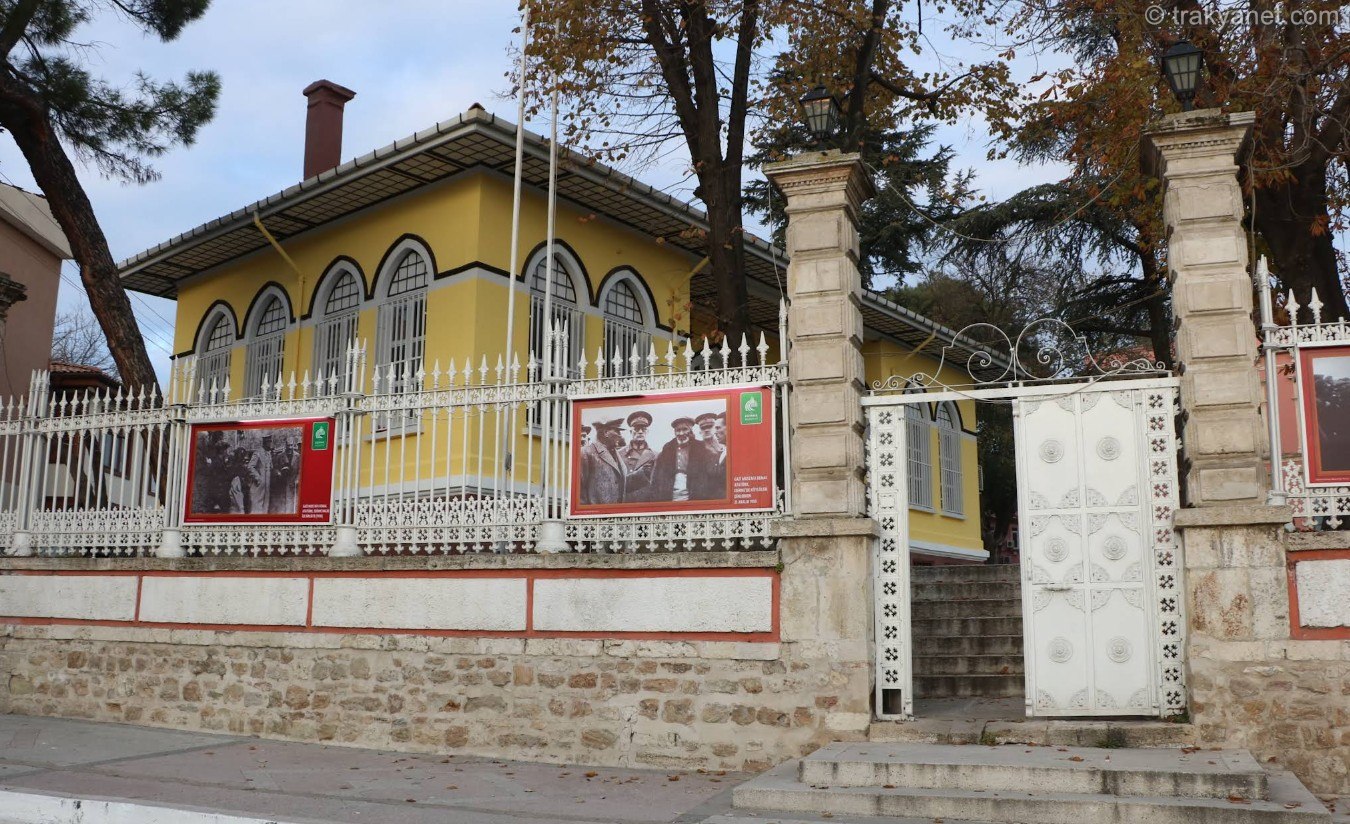




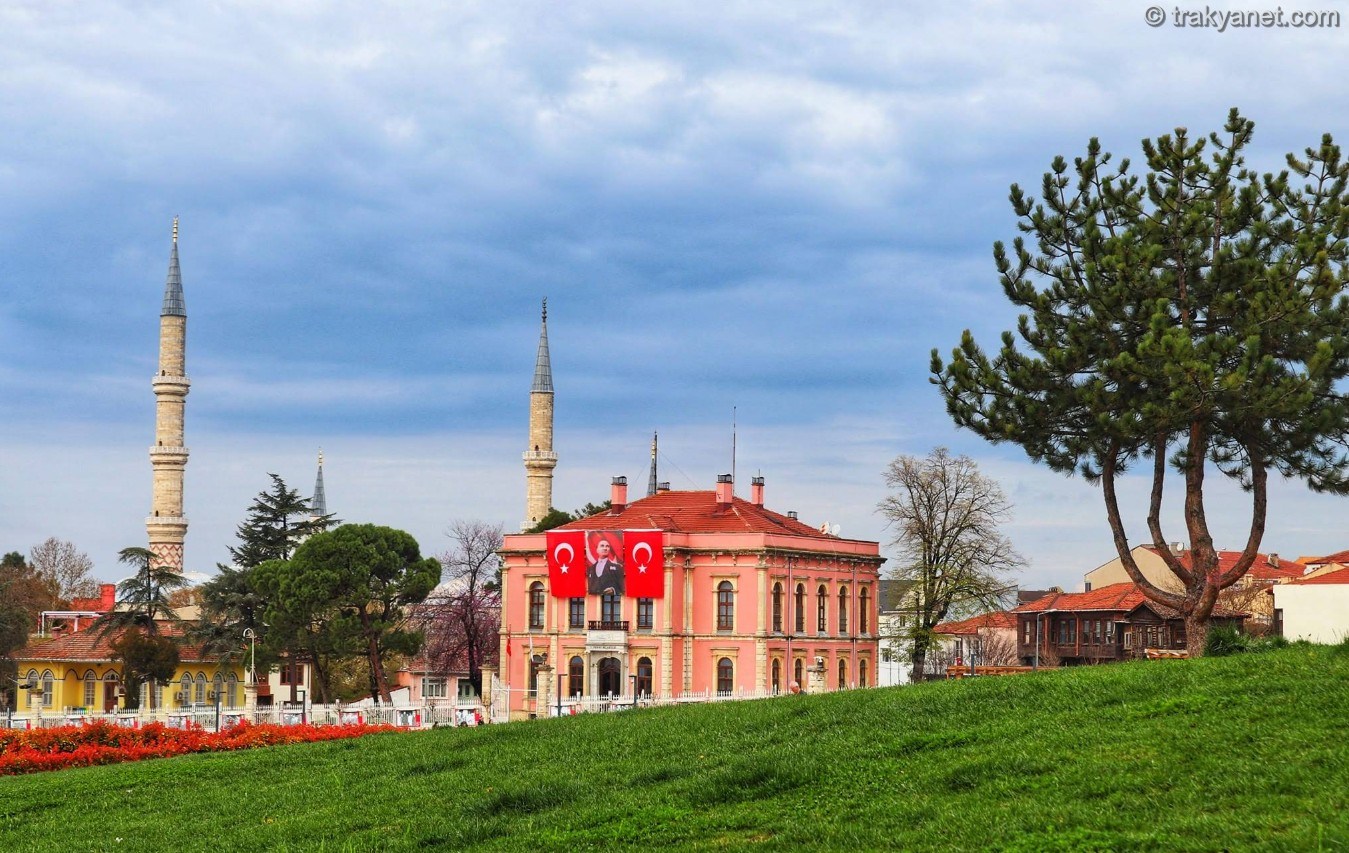
During the 19th century, the Ottoman Empire constructed numerous buildings in Edirne in the Western architectural style, including government buildings, municipal buildings, military offices, schools, military depots, barracks, and hospitals. The Edirne Municipal Building, constructed during the modernization period, is a significant structure reflecting the architectural understanding of the time and the changes in urban governance. Located on Mimar Sinan Street in the Babademirtaş neighborhood, the building holds an important place in the city's memory.
Historical Development
Modern municipal administration in Edirne began in 1867-1868 (H.1284) during the governorship of Hursit Pasha, under the name "Daire-i Belediye" (Municipal Office). From its establishment until its relocation to its current building, the municipal organization served in various buildings.
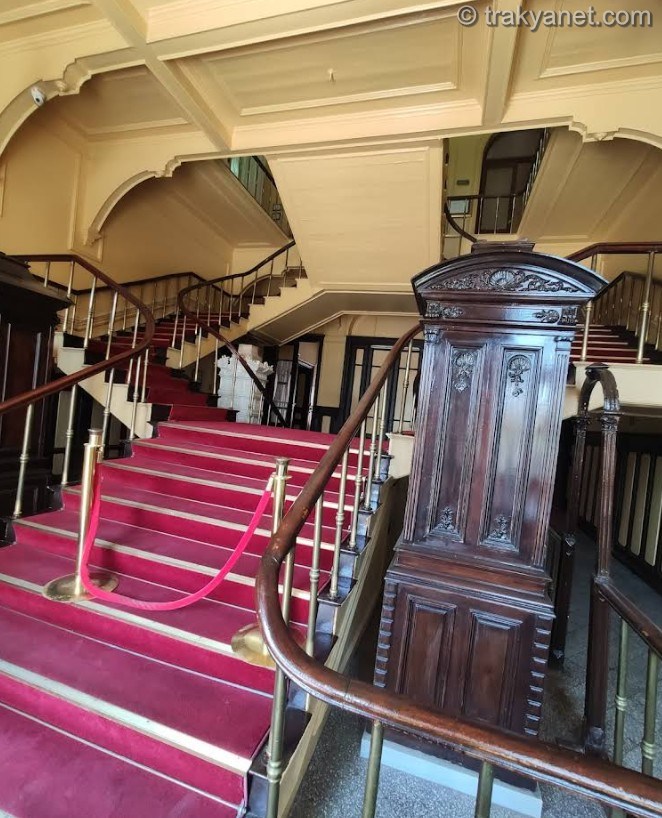
The building, whose foundation was laid in 1898-1899 (H.1316) through the initiative of Mayor Cezzarzade Dilaver Bey, the grandson of the Ottoman vizier Cezzar Ahmed Pasha, famous for defending the Akka Fortress against Napoleon Bonaparte, and who also commissioned French experts to prepare the urban development plan in 1908, was constructed at a cost of over 5,000 lira. The project for the building was prepared by Nazif Akanlar, a prominent architect of the time, a teacher at the Edirne Military Academy, and a municipal engineer from Edirne. Regarding the building, Dr. Rifat Osman stated: "In Edirne, the 'Municipal Office,' first established in 1284 AH (1867 AD) by Governor Hursit Pasha, operated in several old buildings. The current building was constructed in 1316 AH (1898 AD) through the efforts of Mayor Cezzarzade Dilaver Bey, at a cost of over 5000 lira. It is a two-story building with 10 rooms and 2 halls. During the Bulgarian invasion, this building was allocated by the Municipal Council to King Ferdinand of Bulgaria as the 'King's Palace,' and the Municipal Office was subsequently moved to the Art School.After 1330 AH (1911 AD), the houses and shops next to it were expropriated and demolished, the garden on the west side was expanded, and the Health Directorate building was constructed."Edirne Mayor Dilaver Bey, a passionate art enthusiast, took significant steps to enrich the municipal building artistically. He commissioned several paintings to decorate the building. The paintings purchased from the military painter, martyr Hasan Riza, have both beautified the rooms of the building and provided the municipality with a rare art collection. The works exhibited in the Municipal Council Hall, including "Red Sea Landscape" by painter Hasan Mehmed, "Deer Landscape" by painter Topcu Kaymakami Resid, and a painting of the Edirne Municipal Council members from 1902 by painter Ohannes Kurkdjian, as well as photographs of the mayors who witnessed the institution's history in the hall on the first floor, hold a special place.The two colorful tiled stoves in the council hall both meet the heating needs of the space and add visual richness. The magnificent chandeliers in the council hall and the valuable paintings displayed in the rooms on the ground and upper floors of the building are important elements that further enhance the artistic and historical value of the space.
Ataturk's Visit
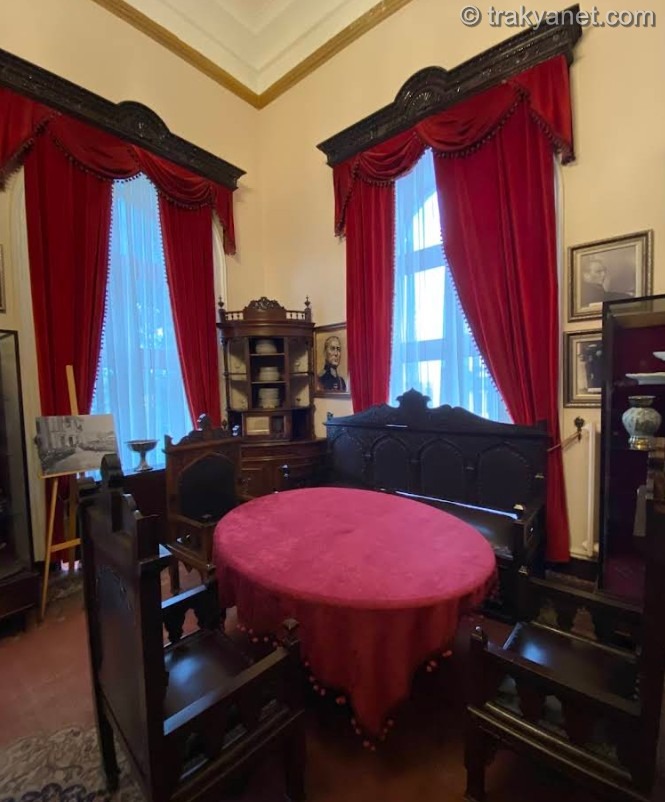
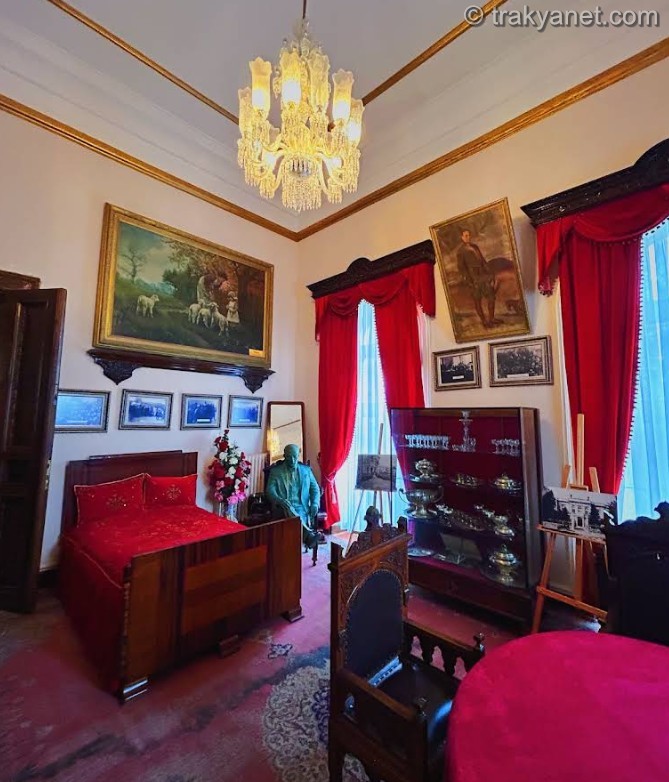
The room where Mustafa Kemal Ataturk was hosted during his visit to Edirne on December 21-25, 1930, was arranged as the "Ataturk Room" on December 21, 1978. Photographs of Ataturk's visit and items from that period are displayed in this room. The upper floor rooms of the municipality were furnished and decorated for Ataturk and his sister Makbule (Atadan), the Minister of Interior Sukru (Kaya), Ali Sait Pasha, members of parliament Kilic Ali, Recep (Peker), Salih (Bozok), Resit Galip, Rusen Esref (Onaydin), General Secretary Tevfik (Biyiklioglu), Hasan Riza (Soyak), Chief Aide-de-Camp Rusuhi, and other guests.The Bulgarian and Greek Occupation PeriodDuring the Balkan War, the building was moved to the Sanayi-i Hamidiye (Industrial Vocational High School) building because it served as the headquarters of foreign states, and it returned to the same building after the war. During the Balkan War, Bulgarian King Ferdinand stayed in the municipality building. During the Greek occupation, King Alexander I stayed in the municipality building.
Protection Status
Due to its historical and architectural importance, the building was registered and placed under protection by the decision of the E.K.T.V.K. Board dated 04.07.2003 and numbered 7697.
Structural Characteristics
- It is built using rubble stone technique, consisting of a basement, ground floor and one upper floor.
- It contains 10 rooms and 2 halls.
- There is a white stone-clad plinth 80 cm high.
- It is located in a large garden.
Facade Features
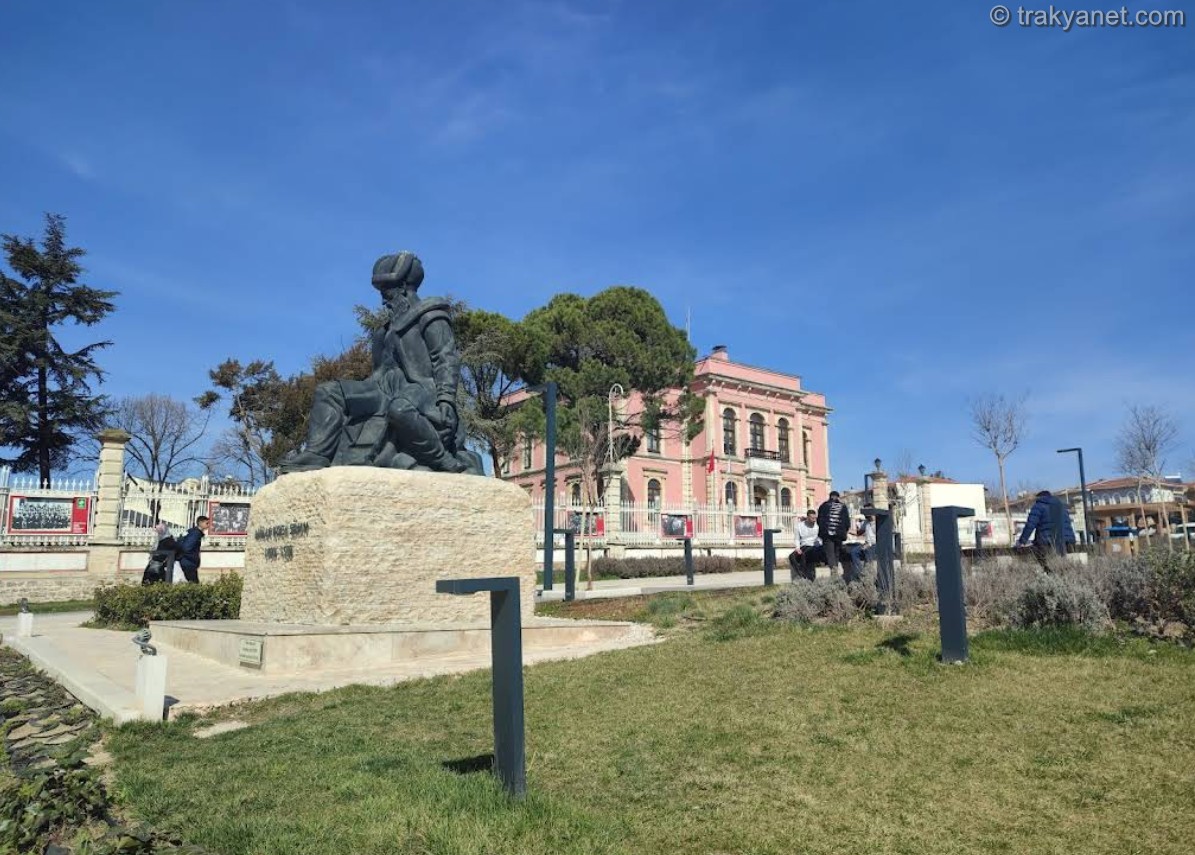
- There is a double-winged wooden entrance door.
- There are protruding moldings at the level of the floor and roof parapet.
- There are roof moldings supported by hip-shaped supports.
- There are corner accents with white stone masonry.
- There are rectangular wooden windows with rounded arches.
- There are windows framed by columns with bases, capitals, and keystones, emphasized in Neo-Classical style.
- The facade decorations are enriched with the use of pink and white colors.
- A balcony entrance is arranged on the front facade.