
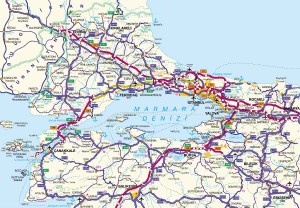
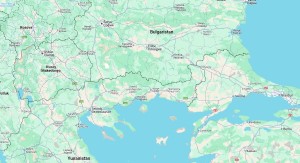
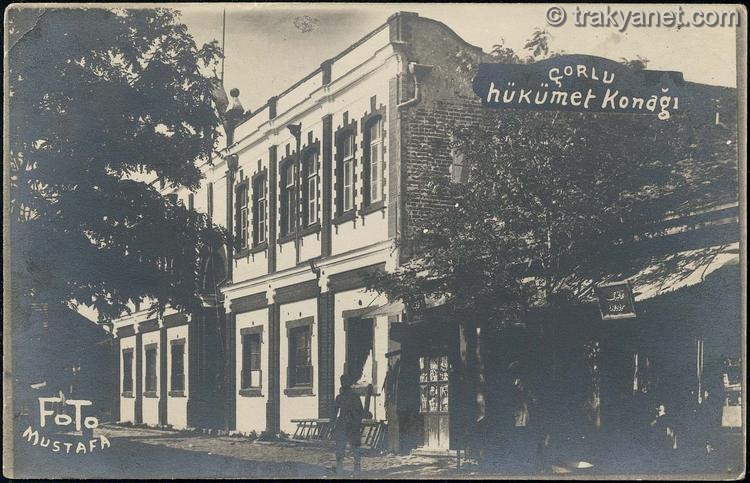
Corlu is located in the central part of Thrace, on a plain above the plateau. Its higher elevation compared to the surrounding area facilitates the city's defense and provides the advantage of anticipating potential threats. Furthermore, the Corlu Stream, which flows just north, supplies the city with water year-round. Possessing all the geographical features sought by early humans, this area was undoubtedly opened to settlement and agriculture with the Thracian migrations. Indeed, the discovery of prehistoric settlements in the vicinity supports this view. However, due to insufficient research, it is not possible to give definitive information about the founding date of Corlu.
There are many different interpretations regarding the name of Corlu. In old atlases, the city's name appears as "Tzarylus", "Tzurulum", "Tzuruius", "Tzurule", "Tschuria", and "Tziraitum". During the Byzantine period, because its cheese was famous, it was called "Tribiton", meaning "Cheese Town", and in some works it is also recorded as "Sirello". Among the people, it is stated that the name Corlu originates from "cor" or "cur", meaning barren or useless, and that it comes from "cor", likening it to the word "zor" (difficult) because of the difficulties encountered during the conquest of the city by the Turks.
During Roman times, it was called "Cohors III" in Thrace. It is known that there was a military unit called "Lucensum," and that this unit consisted entirely of Thracian warriors. The Romans used Thracians in wars and assigned them to "Cohors" units. The word "Cohors" here is very similar to the name of the city of Corlu.
The historical document unearthed in Kamaradere, just east of Marmara Ereglisi, provides the oldest and most definitive information about Corlu. The inscription on the tomb found in Kamaradere states, "Here lies Sisinis, who twice served as the ruler of Corlu-Tzouios." Considering that Sisinis died in 814, it is understood that the document belongs to the Byzantine period. Sisinis served as an administrator in the town of Corlu with the title "Curator Civitatis," and due to his success, he held this position twice.
The word "Curator," closely related to the name of Corlu, means "one who takes care, one who pays attention" in both Latin and Greek alphabets. Curator was the title of those responsible for special tasks in settlements that had reached the size of a municipality, in other words, the mayors. This title was used for mayors in cities in Roman provinces at the end of the 2nd century.
In the vast Byzantine Empire, there were constantly border guards to protect the borders. The forces on the border were especially chosen from brave and warlike nations. During the years when Sisinis, whose tomb is located in Kamaradere, lived, Thrace was under threat from the armies of the Bulgarian King Krum. Against the increasing Bulgarian pressure, it is quite natural for Byzantium to make agreements with mercenary soldiers and place them at the defense points on the border. The name of the city of Corlu also appears to have been given at this time, at the beginning of the 9th century. It is highly probable that this took shape.
The term Cor or Cur was used as a high rank or title among ancient Turkic tribes. Similarly, it is known that the word Sisinis was given as a title to the commanders of the Huns or Alans who were auxiliaries in the Byzantine army. Both Sisinis and Cor changed under the influence of Byzantine culture, with Sisinis becoming the name of the official and Cor the name of the border fortress where the duty was performed. Thus, the name of the city of Corlu originated from Cor or Cur.