
In the West, organizations similar to Chambers of Commerce found their counterparts in the form of guilds, trade associations, and craft organizations.
In the Ottoman period, structures similar to Chambers of Commerce began to emerge in 1876. In the region, in accordance with the provisions of the Rumelia Provinces Law, a Chamber of Commerce was established in 1882 during the time of Kadri Pasha, the Governor of Edirne, and a Chamber of Commerce was also established in Kirklareli. According to old records, the Chamber of Agriculture was also merged with the Chamber of Commerce and administered by a president and seven members under the name of the Chamber of Commerce, Agriculture and Industry. During the complex and war-filled years between the declaration of the Constitutional Monarchy and the declaration of the Republic, there was no active Chamber of Commerce.
On September 27, 1883, the establishment of Chambers of Commerce was initiated with the draft law requiring traders to be official and compulsory members, through the Regulations of the Chambers of Commerce and Industry.
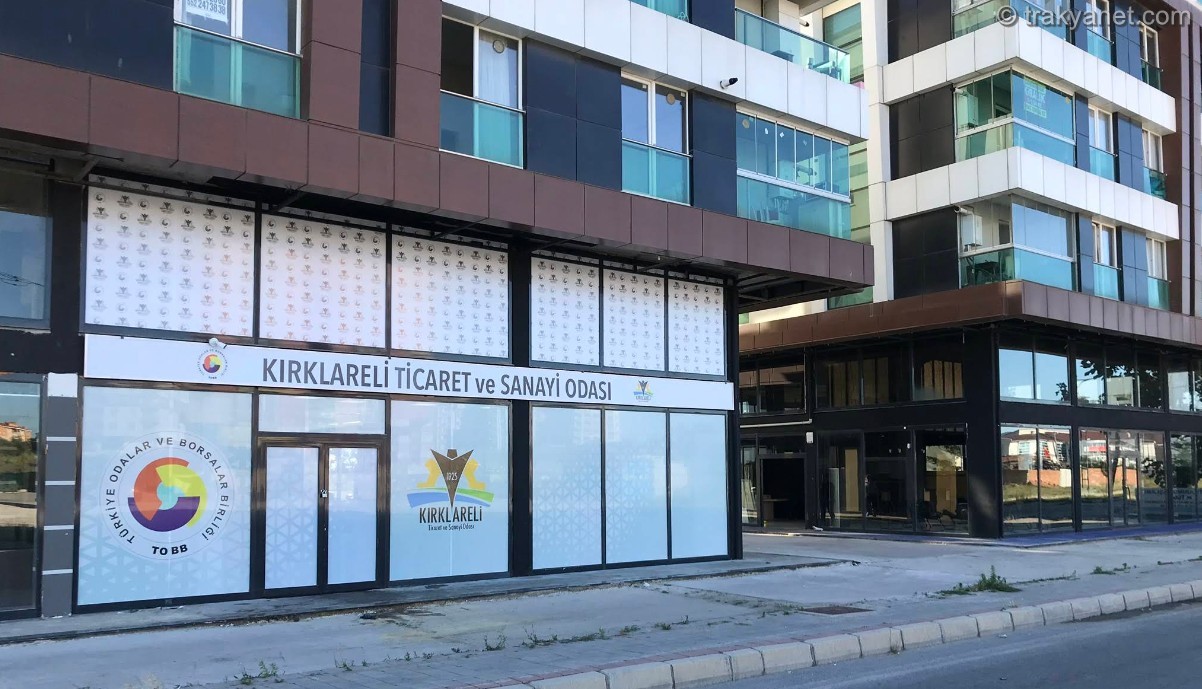
The Kirklareli Chamber of Commerce was established in 1883 in accordance with the law, through the initiatives of Retired Inspector Ali Riza (Dursunkaya) Bey, the owner and chief editor of the Kirklareli Newspaper, and twenty of his friends. In 1926, a committee formed by secret ballot and a two-stage election brought the chamber into operation with great interest and attention. They opened the stock exchange and, through close cooperation with the stock exchange, laid the foundation for today's Chamber and Stock Exchange. The Chamber of Commerce, holding its congress annually with delegates from the districts, was able to communicate its economic needs to the government through delegates sent to the regional congress. As the chamber became more active, its income increased. The first speech given by the founding committee and also the first president of the chamber, Ali Riza Bey, in the presence of the founders, is as follows:
Honorable fellow merchants
"Unfortunately, we have a very obvious and clear weakness; our merchants almost generally operate under instinct." There is no group among us that has yet united around an entity that would forgo natural needs such as advertising, propaganda, etc.
Despite having a very broad and authoritative charter, our Chamber of Commerce is merely a name. The nation finished its great struggle by saving the country. When this ended, a second war began, the most important of which is the war of economics and commerce. It is futile to expect the advancement of trade and wealth with the means of the early ages. Defeats in economic wars will drag us into poverty and destitution.
Why are we not involved with the Stock Exchange?
We live right next to Istanbul, who will provide us with commercial activities? Why has the initiative to allocate a business bank stalled? Why don't the capitalists and merchants at the helm of our trade guide us in our business affairs? Why doesn't the small shopkeeper and merchant class, who are constantly jumping in and out of business like a game of blind man's bluff, receive protection?
We earnestly request that they take action for the sake of the country's happiness and prosperity, and strive to accomplish these tasks. We expect great service and support from a Chamber of Commerce.
We should not allow any of the five hundred or so merchants and shopkeepers to conduct their business without being subject to any ceremony and without being informed of the existence or non-existence of the Chamber of Commerce. They should both provide revenue for the Chamber and make the Chamber beneficial to the country.
This is not a good course of action. We invite our concerned merchants to fulfill their duties, and we consider this a debt.
ALI RIZA DURSUNKAYA